
Cabinet Refinishing · Jun 2021
Cabinet doors sprayed in shop spray booth
Cabinet doors sprayed in shop spray booth. These are before, in-progress and after photos from the job, taken Jun 2021. This cabinet refinishing project was done by Larry Gaytos and the My Personal Painter crew. We are based in Florence, Kentucky, and our work is covered by a 2-year touch-up warranty.
Before and After Photos
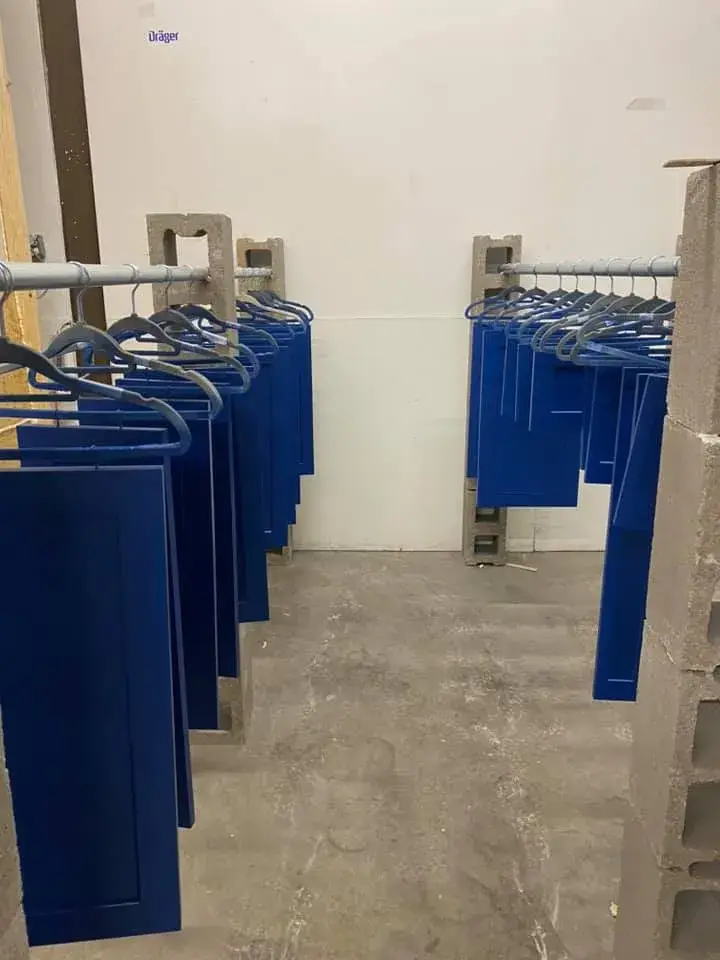
Cabinet Doors Sprayed Navy and Bright Blue in Our Shop Spray Booth
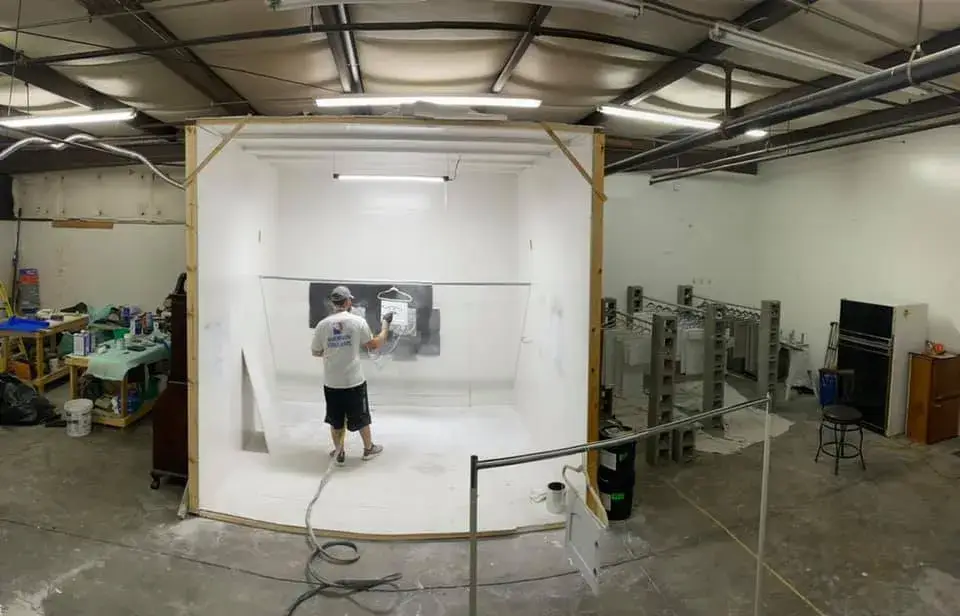
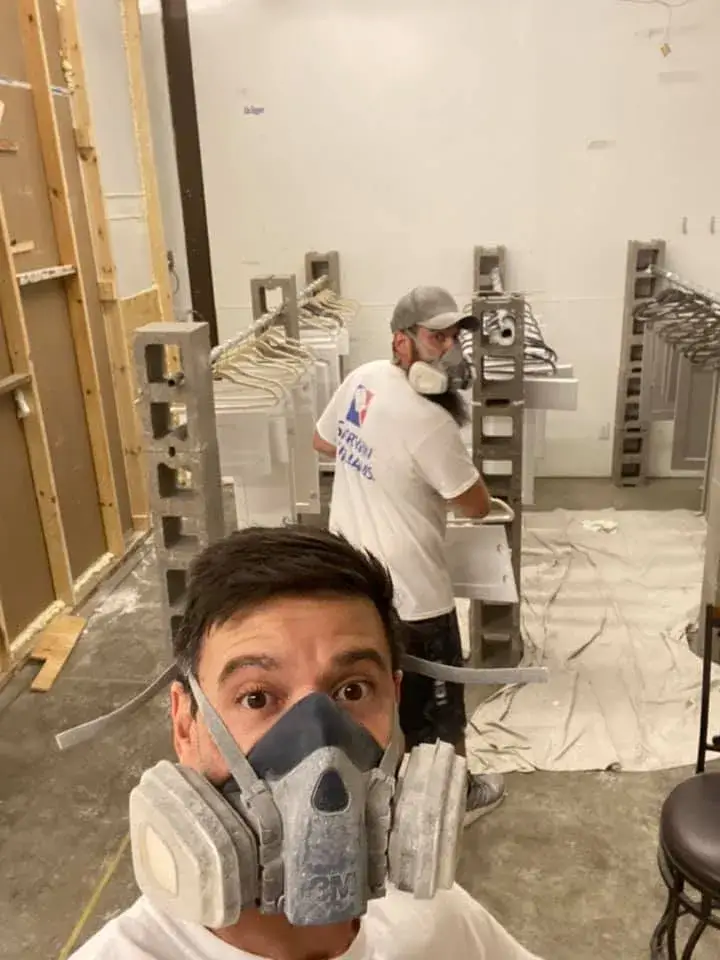
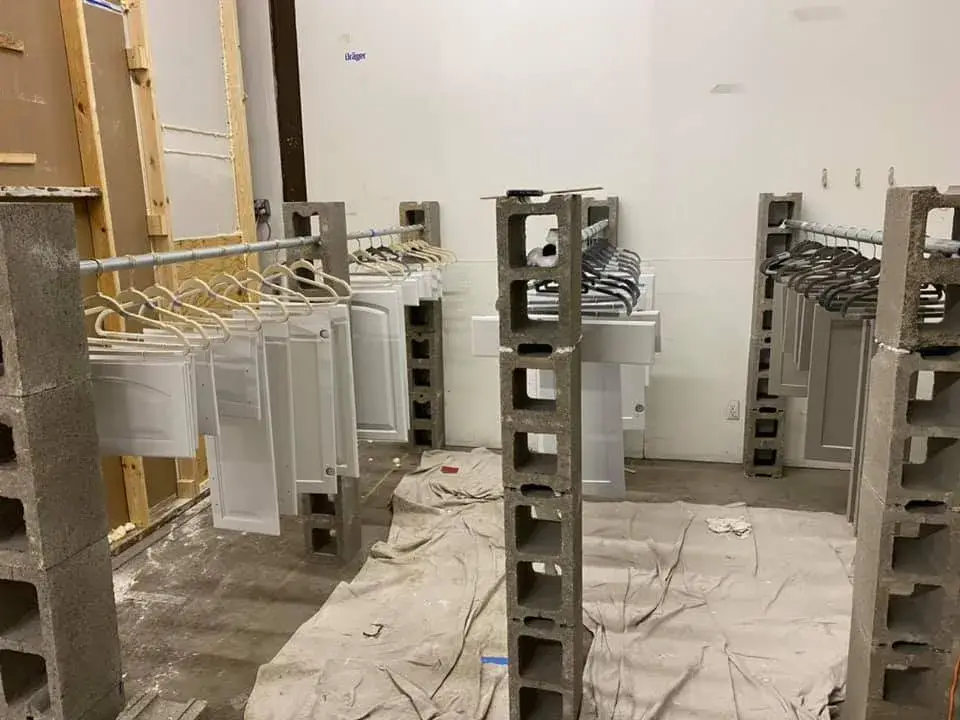
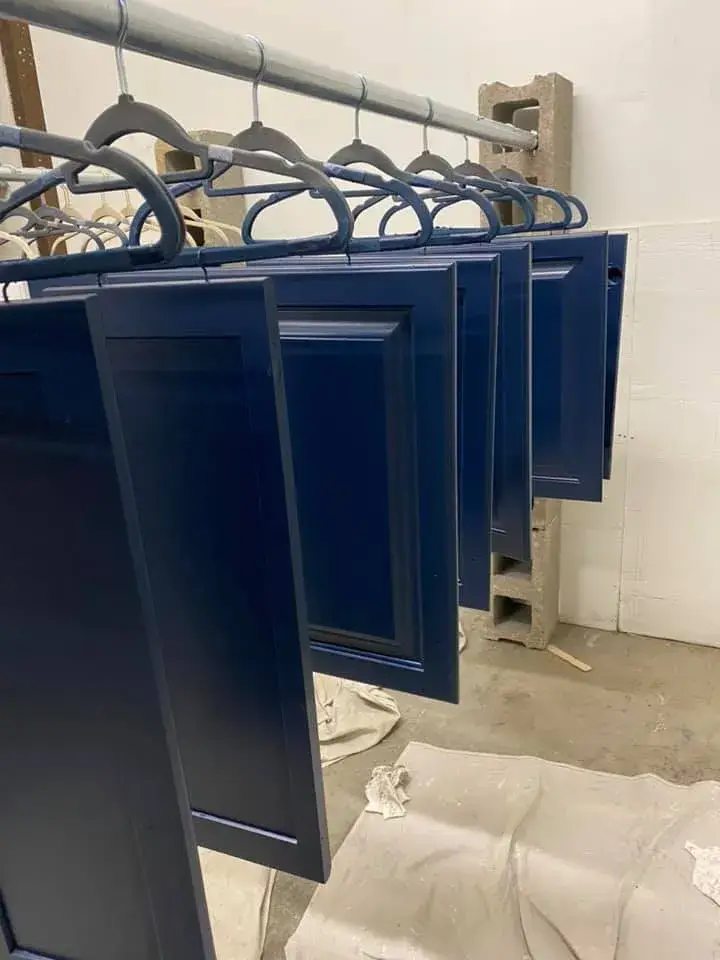
This project shows the shop side of cabinet refinishing. The first photo is a wide view of a white spray booth built inside a warehouse space. A painter stands inside spraying a door hung on a rack, while rows of cinder block stands with metal pipes hold more doors on hangers outside the booth. In the next photos, two painters in respirators work among the racks. White primed doors hang in neat lines, some with arched raised panels and some with flat shaker panels, over drop cloths on the concrete floor. The finished photos show two shades of blue. One set of raised panel doors is a deep navy with a smooth, even sheen that catches the light along every edge. Another set of shaker doors is a vivid royal blue. Each door hangs on its own hanger so both faces can dry without touching anything.
How We Spray Cabinet Doors in a Controlled Shop Booth
- Doors and drawer fronts come out of the kitchen, get labeled, and travel to the shop. Hardware stays bagged and matched to each door for reinstalling later.
- Each door is cleaned to remove grease, then sanded so the primer can grip. Any dings or gaps are filled and sanded flat before priming.
- We hang the doors on racks made from cinder blocks and metal pipe. Hangers let us spray both sides and the edges without handling wet surfaces.
- Primer is sprayed first, giving the white coat you see on the racks. Once dry, it is lightly sanded so the color coats lay down smooth.
- Inside the booth, we spray the finish color in thin, even coats. The booth keeps dust off the wet paint and contains overspray, and the crew wears respirators.
- Doors dry and cure on the racks before going back to the home. Then we rehang them, adjust the hinges and reattach the hardware.
Paint Colors Similar to These Navy and Royal Blue Doors
Love these blue doors? The navy shades below are similar colors worth sampling, but they are not the exact finish sprayed in our booth.
Sherwin-Williams Naval SW 6244
A deep, rich navy close to the raised panel doors drying on the racks. It works well with brass or nickel hardware and white counters.
Benjamin Moore Hale Navy HC-154
A classic navy with a touch of gray. It would give cabinet doors a slightly softer look than the deepest navy shown here.
Sherwin-Williams Needlepoint Navy SW 0032
A navy with a bit more blue in it. It leans toward the brighter shaker doors while still reading as a dark kitchen color.
Questions About Spraying Cabinet Doors in a Shop
Why spray cabinet doors in a shop instead of in my kitchen?
A spray booth controls dust, overspray and airflow, which helps the finish come out smooth. It also means less mess and odor in your home. The cabinet boxes still get painted on site, but the doors and drawer fronts get the cleanest finish in the shop.
How do you keep track of which door goes where?
Every door and drawer front gets labeled before it leaves the house, and hardware is bagged with it. That way each piece goes back to the same opening. It matters because older cabinets often have small size differences, and hinges wear to fit one spot.
Are sprayed cabinet finishes more durable than brushed ones?
Durability depends mostly on the prep and the product, not just the method. Spraying gives a smoother look with no brush marks. A well-sanded, primed and properly cured finish holds up to daily use whether it is sprayed or brushed, as long as it gets time to harden.
More Cabinet Refinishing Projects
Get a Free Estimate for a Project Like This
We’re not just a painting company. We’re your personal painter.