
Interior Painting · Jan 2020
Arched trim, doorway and window niche painted
Arched trim, doorway and window niche painted. These are before, in-progress and after photos from the job, taken Jan 2020. This interior painting project was done by Larry Gaytos and the My Personal Painter crew. We are based in Florence, Kentucky, and our work is covered by a 2-year touch-up warranty.
Before and After Photos
Arched Doorway Trim, Keystones and a Window Seat Niche Painted White
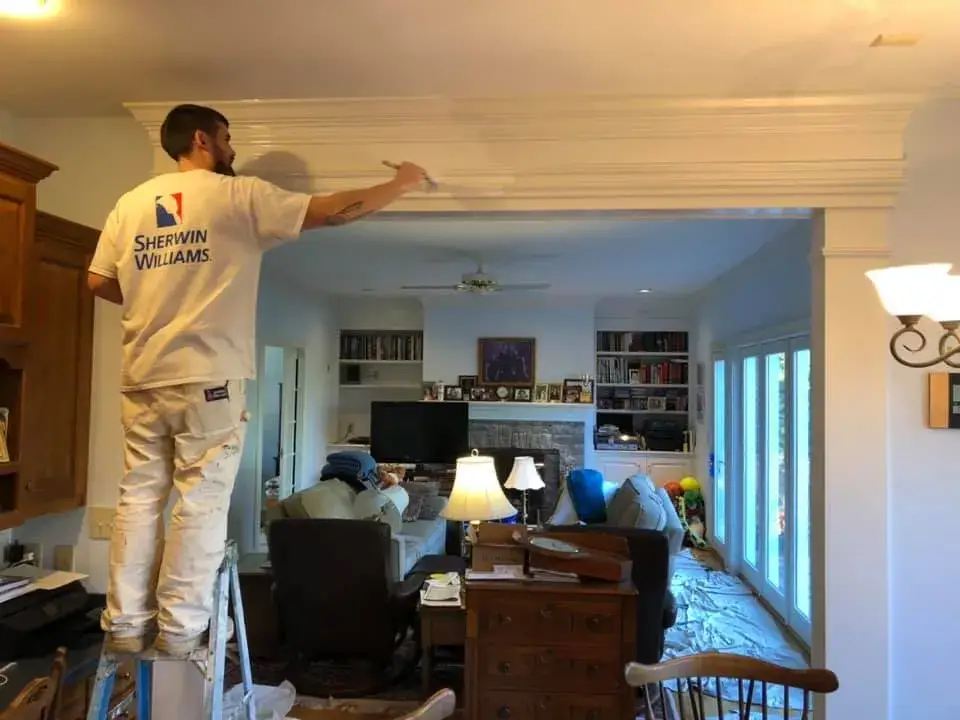
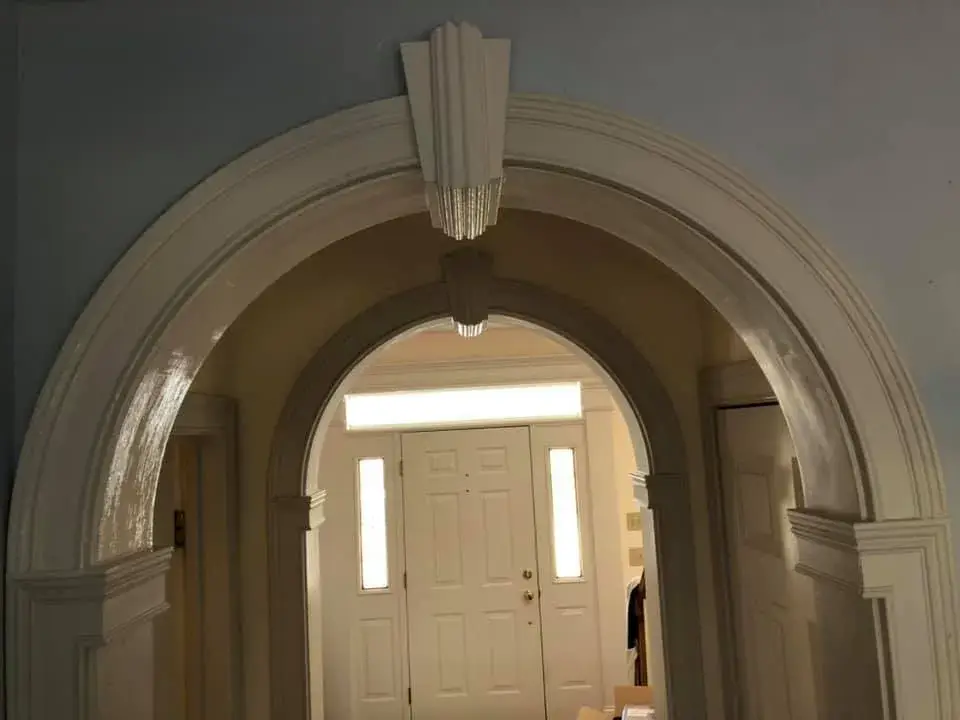
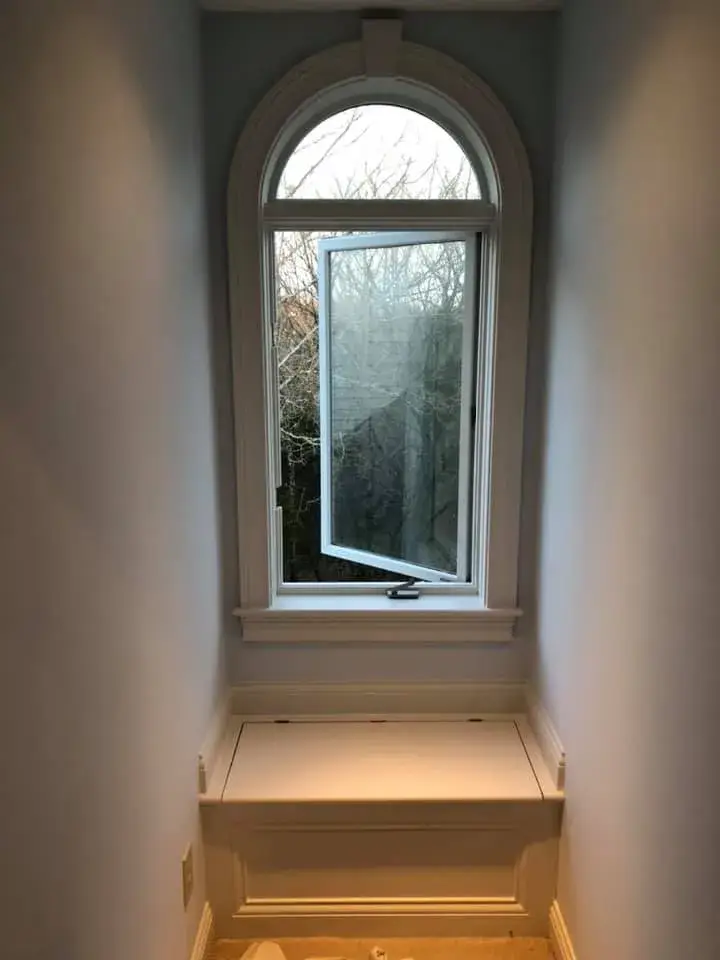
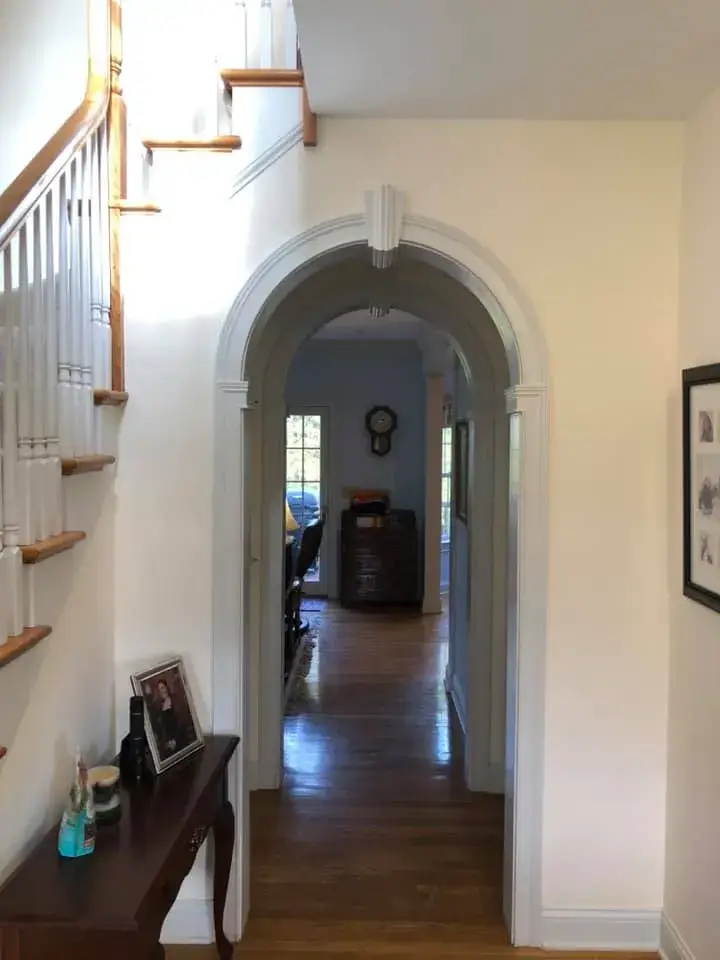
This older home is full of detailed millwork, and this job focused on the trim. The first photo shows one of our painters on a ladder brushing a wide, built-up header with layered crown molding over the opening to the family room. Drop cloths cover the floor, and the furniture is pulled back. In progress, a double arched doorway shows fresh, glossy paint on the wide casing, the fluted keystones at the top of each arch and the square plinth blocks where the arch meets the side casing. The pale blue wall around it was also being finished. Another photo shows a narrow niche with an arched window, a half-round top casing with its own keystone and a paneled window seat below. In the after photo the arched doorway reads a clean, soft white against warm cream walls. Down the hall you can see the oak stair rail, white spindles and wood floors.
How We Painted This Arched Trim and Window Niche
- We covered the floors with drop cloths, moved furniture back from each opening and set up ladders so the high headers could be reached safely.
- All trim was cleaned and lightly sanded. Older millwork often has layers of paint, so we smoothed drips and rough spots from past coats.
- Gaps where the casing meets the wall, and cracks in the arch joints, were caulked so the curves would read as one smooth line.
- We primed any bare wood and patched spots, including small dings on the keystones and plinth blocks, which take the most bumps in a busy hall.
- The trim was brushed rather than sprayed, working paint into the fluted keystones and layered crown molding without letting it pool in the grooves.
- Two coats of trim enamel went on the doorway arches, header and window niche, including the window seat panels and the curved casing.
- After the trim dried, we cut in the surrounding walls to create a crisp line along each curve and checked every arch in good light.
Paint Colors Similar to This White Arched Trim
These are similar colors to consider for detailed white trim and cream walls like these, but they are close matches to look at, not the colors confirmed for this millwork.
Benjamin Moore White Dove OC-17
A soft, warm white close to the arched casings, and it keeps detailed trim looking classic rather than stark in an older home.
Sherwin-Williams Creamy SW 7012
A warm cream like the walls around the finished arch, which lets white trim stand out just enough to show the curves.
Sherwin-Williams Rainwashed SW 6211
A light blue-green in the spirit of the pale blue wall seen in progress, a calm choice next to white millwork.
Questions About Painting Detailed Interior Trim
Is trim usually brushed or sprayed?
Both are common. Spraying works well for new trim or empty rooms. In lived-in homes with detailed millwork, brushing gives more control and less masking. A good brush and a self-leveling enamel can still give a smooth finish on curves, flutes and layered moldings.
What sheen is best for trim and doorways?
Semi-gloss or satin enamel is the usual choice. These sheens are more durable and easier to wipe clean than wall paint, which matters on door casings that get touched and bumped. Semi-gloss also highlights the shape of detailed molding, like the keystones and plinth blocks here.
Why caulk trim before painting?
Caulk fills the small gaps where trim meets the wall and where trim pieces join. Without it, those gaps show as dark lines and collect dust. It is especially helpful on arches, where joints can open up over time. Caulk should be paintable and fully dry before the finish coats.
More Interior Painting Projects
Get a Free Estimate for a Project Like This
We’re not just a painting company. We’re your personal painter.